Search This Website

Showing posts with label Temples in Varanasi. Show all posts

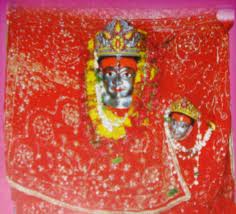
Panchsagar (Maa varahi)Temple(Shakti Pith) in Varanasi Uttar Pradesh

Here is Some Information about Panchsagar Temple in Varanasi Uttar Pradesh India.

Location:  Near Varanasi, Uttar Pradesh
Dedicated to: Goddesh varahi,Durga
Entry:Free
Photography:Allow
Temple Timing: 7 :30 Am to 7:00 Pm
Significance: Among one of 52 Shaktipith
Visiting Timing: 1 hour
Best time to Visit: Oct to March
Nearest Railway Station: Varanasi junction
Nearest Air Port: Allahabad Airport

About Panchsagar Maa varahi Shakti pith Temple

The Panchsagar varahi maa temple is located Near varanasi in Uttar pradesh.Panchasagar Shakti Peeth is among the 51 Shakti Peeth of Maa Sati. It is said that, the Lower teeth of Maa Sati fell here, when lord Vishnu in order to relieve lord Shiva from grief of losing his wife Sati, used his ‘Sudarshan Chakra’ to incise Maa Sati Body. Then, at the place of fall of Lower teeth, this beautiful temple was constructed.
Varahi Maa is one of the Matrikas, a group of seven or eight mother goddesses in the Hindu religion. With the head of a sow, Varahi is the Shakti (feminine energy, or sometimes, consort) of Varaha, the boar Avatar of the Lord Vishnu. In Nepal, she is called Barahi.
The Markendeya Purana praises Varahi as a granter of boons and the regent of the northern direction, in a hymn where the Matrikas are declared as the protectors of the directions. She is also described as riding a buffalo. 
Devi Bhagavata Purana states that Maa Varahi, along with the other Matrikas, is created by the Supreme Mother. The Mother promises the gods that the Matrikas will fight demons when needed. In the Raktabija episode, Varahi is described as having a boar form, fighting demons with her tusks while seated on a preta (corpse).
 
History of  Panchsagar Maa varahi Shakti pith Temple 

History to this place dates back in the time when it is said that the Lower teeth of Maa Sati fell to this place. There is lot of information available about this Shakti Peeth in the religious books and these religious books can be obtained outside the temple or good religious book store. The native people also know lot about this Shakti Peeth and it would be a better idea to sit with them and learn more about the facts that are related to this Shakti Peeth.
 
How To Reach  Panchsagar Maa varahi Shakti pith Temple 

By Road : Tare many public and private vehicles available to reach Panchsagar Maa varahi Shakti pith Temple varanasi.

By Train : The Nearest Railway station is Varanasi Junction.

By Air : The Nearest Airport is Alhabad Airport.

Picture Gellery of  Panchsagar Maa varahi Shakti pith Temple  


Google Map of  Panchsagar Maa varahi Shakti pith Temple 


Read More »

Bharat Mata(Mother India) Temple in Varanasi Uttar Pradesh

Here is Some Information about Bharat Mata Temple in Varanasi Uttar Pradesh india.


Location:Mahatma Gandhi Kashi Vidyapeeth campus
Built in:1936
Built By:Babu Shiv Prasad Gupt
Dedicated to:Mother India
Entry:free
Photography: Allow
Temple Timing:4:30 AM to 8:00 PM
Visiting timing:30 Mins

Best time to Visit:Oct to March

Nearest Railway station:Varanasi
Nearest Airport:  Varanasi


Bharat Mata Temple is among the beautiful temples constructed in 1936 by Babu Shiv Prasad Gupt, a Gandhian follower. It is situated within the campus of Mahatma Gandhi Kashi Vidyapeeth. The shrine is dedicated to Mother India and possesses a beautiful marble structure, which was inaugurated by Mahatma Gandhi.

The temple also has a beautiful structure of undivided India with a three-dimensional view, displaying the exact proportions of lands, oceans and hills. The architecture of the temple is in the shape of pentagonal cone, which is supported by the five pillars. The temple also offers beautiful view of river Ganges and the ghats located in close vicinity. 

Durga Temple
Sankatha Temple
Tulsi Manas Temple
Sankatmochan Temple
Bharat Mata Temple

How to Rich  Bharat Mata Temple

By Road:Varanasi lies on NH2 from Calcutta to Delhi, NH7 to Kanya Kumari and NH29 to Gorakhpur. Some important road distances are: Agra 565 km, Allahabad 128 km, Bodhgaya 240 km, Delhi 780km, Khajuraho 405 km, Lucknow 286 km.

By Rail:Varanasi is an important and major rail junction, served by trains from all metros and major cities across the country. It is directly connected with New Delhi, Mumbai, Calcutta, Chennai, Gwalior, Meerut, Indore, Guwahati, Allahabad, Lucknow, Dehradun.

By Air:Direct, daily flights are available between Varanasi and New Delhi from Babatpur airport which is 22 km from Varanasi and 30 km from Sarnath. It also connects Varanasi to Delhi, Agra, Khajuraho, Calcutta, Mumbai, Lucknow and Bhuvaneshwar.

Picture Gellery of Bharat Mata Temple 


Google Map for Bharat Mata Temple 


View Larger Map
Read More »

New Vishwanath Temple in Varanasi Uttar Pradesh


Here is Some Information about New Vishwanath Temple in Varanasi Uttar Pradesh india.


Location:Banaras Hindu University campus
Built By:Birla family
Dedicated to :Lord Shiva
Entry:free
Photography: Allow
Temple Timing:4 Am to 10 Pm
Visiting timing: 30 Mins
Best time to Visit: Oct to March
Nearest Railway station: Varanasi
Nearest Airport:Varanasi

The new Vishwanath temple of Varanasi is located in the premises of the Banaras Hindu University (BHU).
Golden temple is the second name with which new vishwnath temple .As Golden temple is also known as Birla family and foundation so the temple is also pronounce by the Birla temple. Vishwnath temple is built by the Birla foundation in the honor of lord shiva and its infrastructure is same as kasha vishwnath temple. The temple spectacle is designed by the honorable Madan Mohan Malviya the founder of Banaras Hindu University. Mr. Madan mohan malviya was against the discrimination of upper and lower caste, creed and race in the same way temple doors doesn't pursue any discrimination to any person according to their caste, religion, or richer and standard poor.
New vishwnath temple is the example of individual dedication towards the lord shiva and its designed in the very beautiful way that no one identify in which one is kasha vishwnath and which is new vishwnath in their infrastructure. The inner walls of the temple are ornamented with extravagant sculptures according to the Hindu mythology and verses. The door of the temple opens early in the morning at 4am and shut down at 10pm in the night. Everybody is welcomed in the aarti that took place every morning and evening without any partiality and Prasad offer to every lord shiva devotees. As its shiva temple so every Monday people comes to pour milk on the marble shiva lingam and every year since it built on maha shivaratri people organize a Bhandra in which food is offer to every shiva devotee. The food plate contains Aaloo, puri halwa, kashifal and thandai as shiva Prasad devotes first have the food and later serve to other visitors it's the tradition of this temple.

Durga Temple
Sankatha Temple
Tulsi Manas Temple
Sankatmochan Temple
Bharat Mata Temple

How to Rich New Vishwanath Temple  Varanasi

By Road:Varanasi lies on NH2 from Calcutta to Delhi, NH7 to Kanya Kumari and NH29 to Gorakhpur. Some important road distances are: Agra 565 km, Allahabad 128 km, Bodhgaya 240 km, Delhi 780km, Khajuraho 405 km, Lucknow 286 km.

By Rail:Varanasi is an important and major rail junction, served by trains from all metros and major cities across the country. It is directly connected with New Delhi, Mumbai, Calcutta, Chennai, Gwalior, Meerut, Indore, Guwahati, Allahabad, Lucknow, Dehradun.

By Air:Direct, daily flights are available between Varanasi and New Delhi from Babatpur airport which is 22 km from Varanasi and 30 km from Sarnath. It also connects Varanasi to Delhi, Agra, Khajuraho, Calcutta, Mumbai, Lucknow and Bhuvaneshwar.

Picture Gellery of New Vishwanath Temple 


Google Map for New Vishwanath Temple Varanasi


View Larger Map
Read More »

Durga Temple(Monkey Temple) in Varanasi Uttar Pradesh

Here is Some information about Durga Temple in Varanasi Uttar Pradesh india.

Location:Near to Durga Ghat  on the banks of the holy Ganges River in Varanasi.
Built in:18th century
Built by:Bengali Maharani
Dedicated to:Goddess Durga
Entry:free
Photography:Allow
Attraction: Design Pattern and Busts
Temple Timing:5:00 Am to 10 Pm
Visiting Timing:30 Mins

Best time to Visit: March to Oct

Nearest Railway Station: Varanasi
Nearest Air Port: Varanasi

Brahmacharini Durga Temple is located near to Durga Ghat (Durga Kund) on the banks of the holy Ganges River in Varanasi. The prime deity is the Goddess Durga and is an imposing structure of Devi. The temple, built in 18th century by a Bengali Maharani, is one of the most revered temples in Varanasi. The temple was constructed with many storied Shikhara, placed one over the other. The temple structure is imposing and offers a spiritual ambiance to the environment.

One of the most popular temples, dedicated to Goddess Durga, it sits on the large rectangular tank called Durga Kund in the Southern sector of the city. The Puranas locate Durga Ji at her present site, and she has kept this place for many centuries. She is said to protect Varanasi from the south, as one of the fierce goddess guardians of the sacred zone. According to some who serve this temple, the image of Durga was never established by human hands, but is a self-manifest image. It appeared here of its own accord.

Durga is the 'terrible' form of Shiva's consort Parvati, so at festivals there are often sacrifices of goats. Non-Hindus can enter the courtyard but not the inner sanctum. It is commonly known as Monkey Temple due to many frisky monkey that have made it their home. 
  
History of Durga Temple Varanasi

Varanasi is a place highly revered by the Shaivite Hindus. The general trend noticed is that Durga Temples are a rare find in regions which has many followers of Lord Shiva. This is why it is indeed quite surprising to find a Durga Temple in a place like Varanasi reputed for being a Shaivite stronghold. Anyways the temple was constructed by a Bengali Maharani. It was built in the 18th century. Even though she is credited with the construction of the temple, the deity that is enshrined within the temple was not established by her. According to popular legend, Durga herself appeared in this temple at Benaras ( the other name by which Varanasi is known ), India. Durga temple, also known as the "monkey temple" is one of the important temples of Varanasi. This temple is dedicated to Goddess Durga. The Durga temple was built in the eighteenth century. A Bengali Maharani built the Durga temple in Nagara Style ( the North Indian style of temple architecture ). It is stained red with ochre and has a multi-tiered shikhara ( spire ). The Durga temple is situated on a rectangular tank, called the Durga Kund. According to the Puranas, Goddess Durga has kept this place for many centuries and protects the holy city, Varanasi, from the South. According to legends, the present statue of Goddess Durga was not made by man but appeared on its own in the temple. The Durga temple is also called Monkey temple because of the presence of large number of monkeys. In Hinduism, Durga is represented as the embodiment of shakti or female power, clad in red, riding a tiger and fully armed with Shiva's trident, Vishnu's discus and a sword. Non-Hindus can enter the courtyard of the Durga temple but not the inner sanctum.
Archituctr of the Durga Temple Varanasi 

The temple is based on square shape. It has a square campus. The main building of temple is built of a square shaped stage. The shape of building is also square. The stage of the temple contains rooms in it, which are used for temple's staff purposes and sometimes, for Yagya. The campus is a green campus with trees and plants. Visitor can walk around the main temple building in the campus. It's useful since, some worshippers walk around the building of temples for religious reasons in Hinduism. The temple has a huge square pond in front of it. The pond is with stone stairs in all sides and four watch pillars on each corner. There is a shade made of stone also at one side of the pond. The stone work on the walls of temple building also emphasizes the square shape. The temple wall has designs built in square shaped blocks and ornamental scrawls.
About Durga Kund

On the right side of the Durga temple, a rectangular tank of water known as Durga Kund (Kund means pond or pool). Earlier it was directly connected to the river so that it can automatically replenish. But currently the water channel is closed to block the water supply. The water in the pond is collected by the rain or drainage from the temple. At the occasion of Nag Panchami, the act of showing Lord Vishnu resting on the Shesha Nag is recreated every year in the Durga Kund.
New Vishwanath Temple
Sankatha Temple
Tulsi Manas Temple
Sankatmochan Temple
Bharat Mata Temple

How to Rich Durga Temple Varanasi

By Road:Varanasi lies on NH2 from Calcutta to Delhi, NH7 to Kanya Kumari and NH29 to Gorakhpur. Some important road distances are: Agra 565 km, Allahabad 128 km, Bodhgaya 240 km, Delhi 780km, Khajuraho 405 km, Lucknow 286 km.

By Rail:Varanasi is an important and major rail junction, served by trains from all metros and major cities across the country. It is directly connected with New Delhi, Mumbai, Calcutta, Chennai, Gwalior, Meerut, Indore, Guwahati, Allahabad, Lucknow, Dehradun.

By Air:Direct, daily flights are available between Varanasi and New Delhi from Babatpur airport which is 22 km from Varanasi and 30 km from Sarnath. It also connects Varanasi to Delhi, Agra, Khajuraho, Calcutta, Mumbai, Lucknow and Bhuvaneshwar.

Picture Gellery of Durga Temple Varanasi 


Google Map for Durga Temple Varanasi


View Larger Map
Read More »

Sankatha Temple in Varanasi Uttar Pradesh

Here is some information about Sankatha Temple in Varanasi Uttar Pradesh India.

Location:  6 km from Cantt. railway station at Scindhia Ghat, Varanasi, U.P.
Built in: Memory of sankata devi
Dedicatedto:Godess of Remedy, Sankata Devi
Entry: Free
Photography:Allow
Temple Timing:04:00Am to 11:00Pm
Visiting Timing: 20 Mins
Best time to Visit: March to Oct
Aarti Time:Artis: Mangla-4:30/6:30, Bhog-2:30pm,
Shringar-11pm, Shayan-11pm,
Friday- special day, opens on all days
Nearest Railway Station: Varanas
Nearest Air Port:Varanasi

Sankatha temple was made in the memory of sankata devi that was celebrated at the 8th day of navrata. The meaning of sankatha is protection so sankatha devi refers as the natural power against danger. Mata durga devi was the nine sister's that is main reason of nine days navrata festival during which do fast means doesn't eat whole day and have the salt free foodstuff in the evening after the mata aarti. Some wish to end their navaratra session at the seven while some either on the eighth or ninth day with serving Prasad and food to nine girls it the complete process of Mata navratra festival. Among the all day eighth day is dedicated to mata sankatha devi and she was the younger sister mata vaisno devi and origanlly known as Matrika (mother). As per the vedic stories she also called as the vikat Matrika or the fierce mother she is the self noticeable goddess.

The celebrated sankatha temple is located near the sindhi ghat and above the sankatha ghat when you will visit you would found the lions pictures in the premises of this temple. One remarkable thing is there are nine more temples in the same series that is also situated nearby this temple. Sankatha temple cataract in the surrounding area of two utter most powerful peeths called seedh peeth (seedheshwar temple) and panch vidya peeth (atma veershewar temple). Mata idol decorated on the auspicious occasion or on demand this place opens at 5.am while close at 10pm. Friday is considered as the special dedicated to mata sankatha and on this weak day special aarti program held in score of people comes to take Mata's blessings. They believed Mata sankatha blessing gives them protection from unethical assets and brings energy in their body for the humanity. 
History of the Sankatha Temple 

Sankatha Temple was built in the memory of sankata devi which is celebrated in the Navratra at the 8th day. 8th day of the Navratra is dedicated to the mata sankatha devi and She is the younger sister of the Mata Vaisno Devi. It is believed that Mata Sankatha blesses Her devotees with the prosperity and brings energy in their body for the humankind.
New Vishwanath Temple
Durga Temple
Tulsi Manas Temple
Sankatmochan Temple
Bharat Mata Temple  
How to Rich Sankatha Temple in Varanasi 

By Road:Varanasi lies on NH2 from Calcutta to Delhi, NH7 to Kanya Kumari and NH29 to Gorakhpur. Some important road distances are: Agra 565 km, Allahabad 128 km, Bodhgaya 240 km, Delhi 780km, Khajuraho 405 km, Lucknow 286 km.

By Rail:Varanasi is an important and major rail junction, served by trains from all metros and major cities across the country. It is directly connected with New Delhi, Mumbai, Calcutta, Chennai, Gwalior, Meerut, Indore, Guwahati, Allahabad, Lucknow, Dehradun.

By Air:Direct, daily flights are available between Varanasi and New Delhi from Babatpur airport which is 22 km from Varanasi and 30 km from Sarnath. It also connects Varanasi to Delhi, Agra, Khajuraho, Calcutta, Mumbai, Lucknow and Bhuvaneshwar.

Picture  Gellery of the Sankatha Temple in Varanasi


Google map for Sankatha Temple in Varanasi


View Larger Map
Read More »

Mritunjay Mahadev Temple in Varanasi Uttar Pradesh

Here is Some Information about Mritunjay Mahadev Temple in Varanasi Uttar Pradesh India.


Location:Way from Daranagar to Kalbhairav temple,Varanasi,UP
Dedicatedto:  Lord Shiva
Entry:free
Photography:Allow
Temple Timing: 4.00 am and closed late night at 12.00 pm
Aarti Timing: 5.30 am, 6.30 pm and 11.30 pm.
Visiting Timing: 30 mins

Best time to Visit: March to Oct

Nearest Railway Station: Varanasi
Nearest Air Port: Varanasi  


Mrityunjay Mahadev Temple of Lord Shiva is situated on the way of Daranagar to Kalbhairav temple. Near Mrityunjay Mahadev Temple temple, there is a well of religious importance; it is believed that its water is a mixture of several underground streams and is good for treating several diseases. In this temple Shiva is worshipped in the form of Mritunjay. It is believed that on worshipping Mritunjay Mahadev one can win over his death. Many people from across the world came here to perform Mahamritunjay-Path. Just besides this temple there is a well. It is believed that the water of the well is a mixture of several underground streams and is good for curing several diseases. According to another popular myth Dhanvantri the father of Ayurveda poured all his medicines in this well .So its water is sacred and eliminate several diseases.
History of Mrityunjay Mahadev Temple

Mrityunjay Mahadev Temple in Varanasi is the very famous and glorious temple. This temple is the holy place of worship and belongs to the Lord Mahadev (Known as Lord Shiva by pilgrims). The history of this temple is all behind an ancient well and “The Shivling”. The meaning of the word Mrityunjay Mahadev is “The God who triumphs over of death”. It is considered as, the Shivling in this temple keep away all the devotees from their unnatural death. Lord Shiva is worshiped as Mrityunjay Mahadev by devotees in order to get triumph over his unnatural death. People from all over India come here and perform “Mrityunjay Path” to get rid of their problems. In the campus of the temple there is an ancient well (also known as koop). The water of this well has therapeutic effect on human beings. It is considered as it has mixture of several underground water streams and has miraculous effect for curing numerous diseases.

Another story behind the magical well is that, a famous person “Dhanvantari” (father of the Ayurveda) has poured all his medicine in that well, that’s why the water of this well is sacred and has medicinal effect as well as able to cure various diseases.
Other Temples in Varanasi

Kashi Vishwanath temple
Sankatha Temple
Annapurna Temple
Kalbhairav TempleNew Vishwanath Temple
Durga Temple
Tulsi Manas Temple
Sankatmochan Temple
Bharat Mata Temple  

How to Rich Mritunjay Mahadev Temple in Varanasi
 

By Road:Varanasi lies on NH2 from Calcutta to Delhi, NH7 to Kanya Kumari and NH29 to Gorakhpur. Some important road distances are: Agra 565 km, Allahabad 128 km, Bodhgaya 240 km, Delhi 780km, Khajuraho 405 km, Lucknow 286 km.

By Rail:Varanasi is an important and major rail junction, served by trains from all metros and major cities across the country. It is directly connected with New Delhi, Mumbai, Calcutta, Chennai, Gwalior, Meerut, Indore, Guwahati, Allahabad, Lucknow, Dehradun.

By Air:Direct, daily flights are available between Varanasi and New Delhi from Babatpur airport which is 22 km from Varanasi and 30 km from Sarnath. It also connects Varanasi to Delhi, Agra, Khajuraho, Calcutta, Mumbai, Lucknow and Bhuvaneshwar.

Picture Gellery of  Mritunjay Mahadev Temple


Google Map for Mritunjay Mahadev Temple Varanasi


View Larger Map
Read More »

Kalbhairav Temple in Varanasi Uttar Pradesh

Here  is Some Information about Kalbhairav Temple in Varanasi Uttar Pradesh India.

Location:  Near the VishesharGanj,Varanasi,Uttar Pradesh.
Dedicatedto: God Kalbhairav
Entry: free
Photography: Allow
Temple Timing: 5.00 am to 1.30 pm and from 4.30 pm to 9.30pm
Significance:One of the big temple
Visiting Timing: 30 mins
Best time to Visit: March to Oct

Nearest Railway Station: Varanasi
Nearest Air Port: Varanasi

Kaal Bhairav Temple is situated in Varanasi.Varanasi is Picturesquely situated on the crescent shaped left bank of the holy Ganga, Varanasi, one of the ancient seats of learning in India, is said to be a compound of the names of two streams, the Varuna and the Assi, which still flow in the north and south of the city respectively. This name seems to have been corrupted, in medieval times to Banaras, which was in use till May 24, 1956 when it was changed to Varanasi, by an order of the Government of India. Varanasi is probably one of the most ancient living cities in India. From time immemorial it has been a great religious center for Hindus and one of their most sacred places of pilgrimage , being visited by millions of people every year.
Situated in Visheswarganj, Kaal Bhairav, is a temple dedicated to Lord Shiva. There are nine other Bhairav temples in the city. Kaal Bhairav, the "Black Terror," is widely known as the Kotwal, the "police chief," of Kashi, and the section of the city in which his temple stands is known as Kotwalpuri. Bhairav is considered a fearsome manifestation of Shiva. He wears a garland of skulls and carries a club of peacock feathers. Kaal Bhairav, whose name, Kaal means both Death and Fate, in addition to meaning Black. He is the black one who has also assumed the duties of the God of Death in Kashi. Even Death, it is said, is afraid of Kaal Bhairava.

Kaal Bhairav's temple today is one of the most intresting in Varanasi. Entering from the street , through a door guarded by Bhairava's mount, the dog, one finds a fine courtyard, in the center of which is the main shrine of Bhairava. Only the silver face of kaala bhairava, garlanded with flowers, is visible through the doorway of inner sanctum. The rest of Bhairava's image-said to be pot-bellied, seated upon a dog, holding a trident-is hidden behind a cloth drapery.
For many centuries, this temple was a spiritual center in Kashi for the most severe of Shiva ascetics, the "Kapalis" or "Skull-Bearers," and their later descendants, the Gorakhnathis. Today, however, the temple is no longer the exclusive domain of such extremist yogis and is, rather patronized by ordinary householders for his protective blessings.This temple is popular and beloved among those who live under its influence in the surrounding Kotwalpuri section of the city.
Other Temples in Varanasi

Kashi Vishwanath temple
Sankatha Temple
Annapurna Temple
Mritunjay Mahadev Temple
New Vishwanath Temple
Durga Temple
Tulsi Manas Temple
Sankatmochan Temple
Bharat Mata Temple  

How to Rich Kalbhairav Temple Varanasi

By air :In Varanasi flights are easily available and serve as the quickest and comfortable way to get to Varanasi city. As the city is well- connected by regular service of flights with some major cities like Delhi, Mumbai (Bombay), Kolkata (Calcutta), Bhubaneswar, Lucknow, Jaipur, Khajuraho, Katmandu. The Airport at Babatpur is just 22 kilometer away from the city.

By Rail: One can get to Varanasi city as it is connected by super fast trains to Delhi and even all the major cities across the country like Mumbai, Kolkata, Chennai, Lucknow, Allahabad, Patna, Jaipur, Gorakhpur and Khajuraho.

Rajdhani Exp ( Hawrah - Mughal Sarai - New Delhi)
Toofan Exp ( Howrah - Mughal Sarai - Delhi)
North East Superfast Exp ( Delhi - Mughal Sarai Guwahati)
Magadh Exp ( Delhi - Mughal Sarai Patna)
Mahanagari Exp ( Varanasi - Mumbai )
Pawan Exp ( Varanasi - Mumbai )
Sabarmati Exp ( Varanasi - Ahmedabad)
Ganga Kaveri Exp ( Varanasi - Chennai)
Poorwa Exp (Howrah - Varanasi - Delhi) Himgiri Exp (Jammu - Varanasi - Howrah)
Sealdah Exp (Varanasi - Jammu Tawi).
By Road: The other means of reaching Varanasi is by road and a good network of roads connects to all major towns of Uttar Pradesh and other neighboring areas. Regular bus services can be availed from Varanasi to Jaunpur, Allahabad, Lucknow, Faizabad and Gorakhpur. One can also go to all the major cities by road.

Picture Gellery of Kalbhairav Temple Varanasi 


Google Map for Kalbhairav Temple Varanasi 


View Larger Map
Read More »

Annapurna Temple in Varanasi Uttar Pradesh

Here is Some Information about Annapurna Temple in Varanasi Uttar Pradesh India.


Location: Near the famous Kashi Vishwanath Temple in Varanasi
Built in: 1729
Built By:Maratha Baji Rao
Dedicatedto: Goddess Annapurna
Entry: free
Photography: Allow
Temple Timing: 4:00 Am to 10:00Pm
Significance: one of the Goddesh of Food Annapurna Temple
Visiting Timing: 40 Mins
Best time to Visit: Oct to April
Weather: Summer 30 to 45°C, Winter 5 to 15°C
Nearest Railway Station: Varanasi
Nearest Air Port: Varanasi
Arti Darshan: Mangala-4am, Bhog-11:30am, Sandhya-7pm, Shayan-10pm

Annapurna Temple is located near the famous Kashi Vishwanath Temple in Varanasi. This temple was built by Maratha Baji Rao in year 1729. In the temple yard there a small sanctum with a large pillared porch housing an image of Goddess Annapurna. The idol of Annapurna Maa is fame of shakti, who made in a solid gold and carries a cooking pot. Devotees believe her the mother of all the three worlds, heaven, earth and hell. Shani god is known for his destructive power and is propitiated to prevent any ill befalling of devote.
The temple belongs to Dashnami Shaiva Paramhans Sannyasis and comes under Annapurna math. The deity is worshipped as one of the many forms of Goddess Durga (Mahagauri Durga) and is worshipped on the 8th day of Navratri.
The temple has two idols of the Goddess made of gold & brass. Brass idol is accessible to devotees daily, while gold one is open for darshan, on a day before Deepawali. Food is served to all the devotees as Prasad (annadan) of Annapurna Devi daily. The idols of Kuber, Sun, Ganesha, Vishnu & Hanuman can also be seen in the temple premises. The temple attracts a large number of devotees during Annakut festival.
When in Varanasi annual annakuta festival start , which start just after the diwali, then mountain of fruits and sweets and cereals are laid out before the Annapurna maa and later on the fruits and sweets were distributed in devotees as Prasad. It has been said that devotees of goddess never suffer starvation. Annapurna temple of Varanasi is been popular not only in Varanasi but out of Varanasi. Annapurna temple is been opened the day before diwali, this idol could be seen only one day and been closed for a year.devotees have to wait for one year if they missed there chance. Annapurna Goddess sit in the middle and her left is lakshmi (goddess of wealth) and on her right side bhudevi

History of the Goddess Annapurna 

Once, Lord Shiva said to the Goddess Parvati that the whole world is an illusion and the food is the part of that known as ‘Maya’. The Goddess of food (Mata Parvati) became very angry and She had to show the importance of all the material, in order to that She had vanished all things from the world. In the absence of food from the earth, the earth became infertile and everyone had suffered from the deep hunger.
She had to reappear in the world by seeing His devotees suffering from the deep hunger. She, then made a kitchen in the holy city, Varanasi. Lord Shiva too came to Her and said that I understand that the material can never be sent away as an illusion. Mata Parvati became very happy and offered food to the Lord Shiva with her own hands. From that time Mata Parvati is worshiped as an Annapurna means the Goddess of Food.
Another myth about the Annapurna is, Once Mata Parvathi had closed all the eyes of the Lord Shiva (three eyes: Sun, Moon and Fire) and entire world was full of darkness. There was the condition of ‘Pralaya’ and the color of the Mata Parvati became dark also (means She has lost Her Gauri Rupa). She was very sorrow and asked Lord Shiva how to get Gauri Rupa again. Lord Shiva said to Her to make Anna Dan in the Kashi. Mata Parvati took Her Annapurna Rupa with a golden pot and ladle and made Anna Dan in Varanasi. Again She got Her Gauri Rupa. It is considered that Her devotees do Annapurna Pooja by making Anna Dan in Kashi.
There are various names of the Mata Parvati worshipped by Her devotees all over the world. The Annapurna Shatanama Stotram has 108 names and The Annapurna Sahasranam presents one thousand names of the Annapurna Mata.
It is considered that She does not eat a little bit till the time Her devotees have not been fed in Her temple. The Annapurna Vrat Katha has various stories and helps Her devotees to get rid of their problems. Annapurna temple in Varanasi is situated adjacent to the Kashi Viswanath temple. Annapurna Mata is considered as the queen of the Kashi and Lord Shiva is considered as the king of the kashi. In the temple of the Mata Annapurna, in the noon time food as a ‘Prasad’ is offered to all the old, disabled and other devotees daily.

Other Temples in Varanasi

Kashi Vishwanath temple
Sankatha Temple
Kalbhairav Temple
Mritunjay Mahadev Temple
New Vishwanath Temple
Durga Temple
Tulsi Manas Temple
Sankatmochan Temple
Bharat Mata Temple 

How to Rich Annapurna Temple in Varanasi 

By Road :Varanasi has a very good network of roads. There is always frequent public and private buses and road transport to all the major towns of Uttar Pradesh and nearby areas.

By Rail:There are two railway stations in Varanasi, the Kashi Junction and the Varanasi Junction (also known as Varanasi Cantonment). Devotees have facility of trains from Mughalsarai, just 10 km south of Varanasi.

By Air :One can reach the temple as Varanasi is well connected and accessible to major Indian cities and tourist spots. There are daily domestic flights to and from Varanasi to several cities in India.
 
 Picture Gellery of Annapurna Temple in Varanasi 


Google Map for Annapurna Temple in Varanasi 


Read More »

Tulsi Manas Temple in Varanasi Uttar Pradesh

Here is Some information about Tulsi Manas Temple in Varanasi Uttar Pradesh India.


Location:  Varanasi,Uttar Pradesh
Built in:1964
Dedicatedto: Lord Ram
Entry: Free
Photography: Allow
Temple Timing: 5.30 AM to noon and 3.30 to 9 PM.
Significance: Most famous temples of Varanasi
Visiting Timing: 30 Mins
Best time to Visit:October to April
Nearest Railway Station: Varanasi
Nearest Air Port: Varanasi

Tulsi Manas temple is one of the most famous temples of Varanasi. It is also an important tourist attraction of the holy city. The Tulsi Manas temple is located near the famous Durga temple. It was built in white marble in the year 1964. The temple has been made more charming by the magnificent landscaping around it. The Tulsi Manas temple is dedicated to lord Ram. It is believed to be built at the same place where Tulsidas wrote the famous Indian epic, Ramcharitamanasa. The walls of the Tulsi Manas temple are engraved with verses and scenes from the Ramcharitammanasa, the Hindi version of the Ramayana.

History of the Tulsi Manas Temple Varanasi

This temple is a very modern temple built only recently in the year 1964. The ancient Indian epic Ramayana was largely beyond the understanding of the common people of the country because it was written in Sanskrit, a language in which only a learned few were versed. Goswami Tulsi Das took upon himself the responsibility of translating the Ramayana into Hindi. This would considerably reduce the number of people who were being deprived of such a fantastic literary work. He composed his Ram Charit Manas at this very spot in Varanasi or Kashi.

His composition gained tremendous popularity. Ram was always acclaimed and recognized not just as a good king but also as a great king. People read of him in Ram Charit Manas and started eulogizing him. Blessed with unparallel dignity and a lot of virtues, he came to be worshipped by his countrymen. He made a permanent place for himself in the heart of his countrymen and so did Tulsi Das who carved a niche for himself in the literary world. Years later a temple in honor of Lord Ram was constructed at the very spot where Tulsi Das had written of him and the temple was named Tulsi Manas Temple as a mark of respect and reverence for him.

Significance of the temple


The ancient Indian epic Ramayana was written in Sanskrit due to which it was largely beyond the underastanding of most of the people a language in which only a learned few were versed. Goswami Tulsi Das took up the responsibility himself of translating the Ramayana into Hindi. Which in a way considerably reduced the number of people who were being deprived of such a fantastic literary work. Tulsi Das composed his Ram Charit Manas at this very spot in Varanasi or Kashi.

His composition of Ram Charit Manas gained tremendous popularity. Lord Ram was always acclaimed and presented not just as a good king but also as a great king. People read about Ram in Ram Charit Manas and started praising him. Lord Rama was blessed with unparallel dignity and a lot of virtue while his countrymen worshipped him. He made a significant place for himself in the heart of his countrymen and so Tulsi Das had carved a niche for himself in the literary world. Year’s later a temple in honor of Lord Ram was constructed at the very spot where Tulsi Das had written of him and the temple was named Tulsi Manas Temple as a mark of respect and reverence for him.

Ram Charit Manas bestowed Lord Rama as a deity. Before that, he was only considered a King who was unparallelled when it came to dignity. Tulsi Das created a god out of him and in coming centuries he started ruling the hearts of Indians irrespective of their religion. The present temple stands on the same spot. The temple might not look impressive but it is the simplicity in which its importance lies. The serene surrounding welcomes the devotees with break from the jostling and madding crowds at Vishwanath Temple. The walls of this temple are splattered with verses from Ram Charit Manas.

Located seven kilometers from the Varanasi station, the Tulsi Manas Temple has a traditional and cultural history. It is established in that very place where the great Indian epic `Ramayana` was written. It was Goswami Tulsi Das who composed Ramayana in Hindi and named it `Ram Charit Manas`. Lord Rama is the deity worshipped at this temple. Tulsi Das actually created a god out of Rama. Beforehand, Rama was considered as a king who was unparallel.
Other Temples in Varanasi

Kashi Vishwanath temple
Annapurna Temple
Sankatha Temple
Kalbhairav Temple
Mritunjay Mahadev Temple
New Vishwanath Temple
Durga Temple
Tulsi Manas Temple
Sankatmochan Temple
Bharat Mata Temple 

How to Rich Tulsi Manas Temple in Varanasi
By Road :Varanasi has a very good network of roads. There is always frequent public and private buses and road transport to all the major towns of Uttar Pradesh and nearby areas.

By Rail:There are two railway stations in Varanasi, the Kashi Junction and the Varanasi Junction (also known as Varanasi Cantonment). Devotees have facility of trains from Mughalsarai, just 10 km south of Varanasi.

By Air :One can reach the temple as Varanasi is well connected and accessible to major Indian cities and tourist spots. There are daily domestic flights to and from Varanasi to several cities in India.

Picture Gellery of Tulsi Manas Temple in Varanasi


Google map for Tulsi Manas Temple Varanasi 


View Larger Map
Read More »